Digit Path: Math Logic Challenge
Reviews
Digit Path: Math Logic Challenge succeeds by keeping its rules minimal and its pressure low. The core task—drawing a continuous path of adjacent digits that sums to a target—is easy to learn and surprisingly varied across grids. The 4x4 option adds real difficulty by limiting available numbers, while the absence of timers makes the game approachable for children and adults alike. Its main limitation is that it is strictly a solo number puzzle; players seeking action, story, or competition will not find it here.
Description
Connecting Digits to Hit a Target
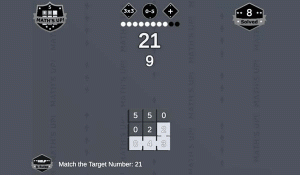
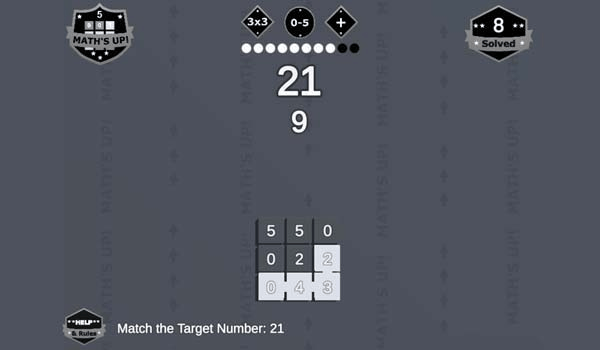
Each puzzle in Digit Path begins with a target number displayed above a grid of single-digit values. Your task is to trace one continuous line through neighboring cells—side-by-side, above or below, or diagonally adjacent—until the sum of the digits you have selected matches the target precisely. The rule itself takes seconds to understand, but the number of possible paths on any given grid keeps the search interesting. Because every digit can belong to more than one potential route, you spend most of your time comparing partial sums and deciding which neighboring cell to include next.
Why Grid Size Changes the Puzzle
Digit Path offers more than one grid size, and the difference is not simply cosmetic. A standard layout gives you more digits to work with, which can make it easier to find a combination that reaches the target without backtracking. The compact 4x4 grid removes that breathing room. Fewer cells means fewer candidate digits, so each choice carries more weight. A path that looks promising early can leave you one or two short of the target with no adjacent cell left to fix it. That tension is what makes the smaller grid appealing to players who want a sharper mental workout, while the standard size remains a gentler entry point.
No Timers, No Pressure
There is no countdown clock in Digit Path. You can study a grid for as long as you like, trace a path, erase it, and try again. This absence of time pressure shapes the entire experience: mistakes cost nothing, and experimentation becomes a normal part of solving. The interface stays minimal so that the numbers themselves remain the focus. For players who use puzzles to unwind, that combination—simple rules, no penalty for wrong attempts, and a clean visual field—makes Digit Path easy to return to for a few minutes or a longer session.
Controls and Device Support
Digit Path runs on desktop computers and on mobile devices. On a computer, you click or drag across the grid; on a phone or tablet, you tap or slide your finger. The grid scales to fit the screen, so the cells stay large enough to select accurately whether you are on a laptop monitor or a small phone display. No additional hardware or account setup is described. The input model is consistent across platforms, which means a puzzle started on one device follows the same rules on another.
Who This Puzzle Suits
The arithmetic involved is basic addition, and the rules can be explained to a young child in a sentence. At the same time, the search for an exact sum on a constrained grid gives adults something to think about. There are no violent or mature themes, which makes Digit Path a reasonable choice for shared family play or for children solving independently. It is best suited to players who enjoy number puzzles, quiet logic challenges, and games that reward patience rather than reflexes.

Editorial Notes