Word Lawrie Vocabulary Puzzle
Reviews
Word Lawrie takes the classic word ladder concept and adds three challenge modes that introduce time limits or move restrictions. The core loop is simple to understand but demands real vocabulary recall. Hints keep it accessible for beginners, while the challenge modes offer extra pressure for experienced players. It suits casual word enthusiasts and families, though players seeking action or complex progression may find it too narrow.
Description
Transforming Words One Letter at a Time
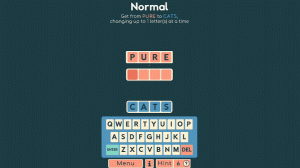
Word Lawrie is a word puzzle built around a simple but demanding rule: change one letter per step to turn a starting word into a target word. Every intermediate word must be a valid English word, so each move forces a choice between several possible paths. The puzzle rewards vocabulary recall and pattern recognition, not guesswork.
Four Modes, Different Pressures
A classic mode offers the traditional word ladder challenge without extra constraints. Three additional challenge modes introduce twists such as time limits or limited moves, changing how you plan each step. In timed modes, quick recall matters; in move-limited modes, finding the shortest path becomes the priority. These variations give the same core mechanic different strategic weight.
Hints and Accessibility
Hints are available when a puzzle stalls, making the game approachable for beginners while still offering a challenge for experienced players. The hint system lets you continue without abandoning a puzzle, but relying on it too often can slow vocabulary growth. The game is designed for all ages and focuses on mental agility rather than reflexes.
Building Vocabulary Through Play
Each puzzle encourages thinking about common letter patterns and word families. Because every step must form a real word, players naturally consider prefixes, suffixes, and letter swaps they might not use in casual conversation. Regular play builds both speed and word recognition, and the difficulty scales through the challenge modes rather than through complex controls.








Editorial Notes