Moto Run Off-Road Racing Game
Reviews
Moto Run Off-Road Racing Game delivers a focused motocross experience built around balance, speed control, and track familiarity. The realistic physics and increasing level difficulty give it a clear skill curve, while keyboard and on-screen controls keep it accessible. It suits players who prefer precision racing over combat or story. The main limitation is that the input describes only single-player course completion, so those seeking multiplayer or extensive customization may find the scope narrow.
Description
Track Design and Terrain Challenges
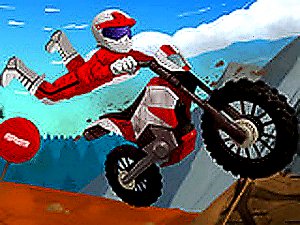
Each course in Moto Run Off-Road Racing Game is built around uneven dirt terrain that changes how the bike responds. Bumps, jumps, and tight corners force players to read the ground ahead rather than hold a single speed. The layout of every track rewards anticipation: a jump that looks safe at full throttle can throw the bike off balance on landing, while a sharp turn taken too fast ends the run.
Balance and Speed Control
The bike is controlled with keyboard arrow keys or on-screen buttons for acceleration, braking, and leaning. Leaning forward or backward is the core survival tool. It keeps the bike stable over bumps, helps level the landing after a jump, and prevents the rider from tipping when the terrain shifts. Speed boosts appear along the track, but grabbing one at the wrong moment can make an upcoming turn harder to clear.
Progression Through Increasing Difficulty
Moto Run Off-Road Racing Game includes multiple levels that grow harder as players advance. Later courses combine tighter turns, rougher ground, and more demanding jump sequences. Realistic physics affect how the bike handles, so the same input that worked on an early track may need adjustment later. This progression keeps the focus on repetition and track knowledge rather than raw speed.
Approach for New Riders
New players benefit from learning each track before pushing for fast times. A steady pace through corners and bumpy sections is usually safer than full throttle. Balance corrections should be small and early, since overcorrecting a wobble often causes a fall. Speed boosts are most useful on straight sections where the bike is already stable, not before a sharp turn.
Editorial Notes