Track & Field: Hammer Toss
Reviews
Hammer Toss strips the sport down to its most tense moment: the release. With only three throws per session and a strict valid-zone rule, every attempt carries weight. The controls are identical across devices, so the experience stays consistent whether you play on a phone or a computer. Improvement comes from repetition and reading the feedback. It suits players who enjoy skill-based timing challenges and short, replayable sessions rather than deep progression or complex inputs.
Description
One Motion, One Decision
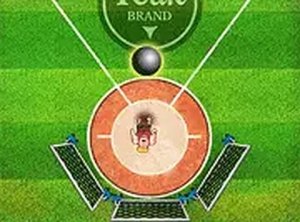
Hammer Toss reduces the sport to a single repeated action: hold to spin, release to throw. The longer you hold, the more speed you build. The challenge is not generating power but judging when the hammer's angle lines up with the open field. A mistimed release sends the hammer off course, producing a shorter throw or an invalid attempt.
Three Throws, Real Consequences
Each session gives exactly three tries. After every throw, the game measures the distance if the hammer lands within the designated zone. Throws outside the marked area do not count. Your final score is the sum of all valid distances. This format forces a choice between chasing maximum distance on every attempt and playing safely to avoid wasted throws. Three attempts is short enough to retry immediately but long enough that one bad release stings.
Controls That Work Everywhere
The game runs in any modern browser on phones, tablets, and computers. On a computer, you click and hold the mouse button to spin. On a touchscreen, you tap and hold. The controls are identical in function, so the experience remains consistent across platforms. A full-screen mode removes browser distractions and focuses attention entirely on the field.
Improvement Through Repetition
Because the game relies on timing rather than complex inputs, improvement comes from repetition. Each attempt provides immediate feedback on distance and validity. Over several sessions, you learn to recognize the optimal release window. The three-throw format also lets you experiment with different hold durations to see how they affect trajectory. This makes the game suitable for short practice bursts or longer sessions dedicated to refining your technique.








Editorial Notes