Erase Together: Couple Puzzle
Reviews
Erase Together: Couple Puzzle stands out by inverting the drawing genre: instead of adding lines, you remove obstacles to guide a stick figure couple to safety. The difficulty curve introduces new elements gradually, and hidden mechanisms add depth without feeling unfair. The minimalist art and lack of penalties support a relaxed, methodical play style. It is best suited to casual players and puzzle fans who enjoy observation-based challenges rather than fast reflexes. The main limitation is that the concept may feel repetitive to players seeking more varied mechanics.
Description
Erasing, Not Drawing
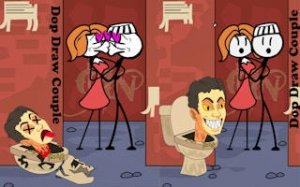
Most drawing games ask you to add lines. Erase Together flips that: you remove parts of the picture. Each scene shows a stick figure couple who need a clear route to an exit. By erasing walls, barriers, or objects, you open that route. The control is direct—tap or click on something to make it vanish. The challenge is deciding what to erase and what to keep, because not every object is an obstacle. [IMG_1]
Puzzle Logic and Sequencing
Early scenes teach the basic idea with few elements. Later puzzles add more barriers, so you must plan the order of removal. Some scenes include hidden mechanisms that only activate after you erase specific objects. Rushing usually fails; examining the whole picture first helps. Because there is no penalty for trying different erasures, you can experiment freely until the path is clear.
Stick Figures and Clean Scenes
The stick figure art keeps attention on the puzzle. Simple lines make the couple's expressions and movements easy to read, and backgrounds stay uncluttered so you can spot what needs to go. Lighthearted animations add charm without distracting from the logic. This minimalist style also makes the game easy to pick up on a phone or tablet. [IMG_2]
For Whom It's Made
Content stays appropriate for all ages. Obstacles are everyday things like closed doors or blocked paths, and the goal is always to help the couple move forward. There are no violent or frightening elements, and the non-competitive pace means you can take breaks and return without pressure. It suits casual players, puzzle fans, and families playing together. [IMG_3]
✅ Compatibility & Testing
Faq
Is Erase Together: Couple Puzzle a drawing game?
How do I control the erasing?
Are there hidden mechanisms in the puzzles?
Is the game suitable for children?
Does Erase Together have a time limit or score?
What makes the later levels harder?
Related Titles

Orbital Tap Journey Arcade

Amazon Enigma Temple Adventure

Grid Collector Clicker
Frog Journey Platformer
Galactic Pixel Storm Space Shooter

Word Link Puzzle Game

Words of Wonders Word Puzzle

Word Salad Puzzle: Word Game
Word Snatch Puzzle Game
Word Search Puzzle Online
Daily Word Puzzle Challenge

Editorial Notes